Political Censorship Added to the DSA Bill: A Government Official Instead of a Court
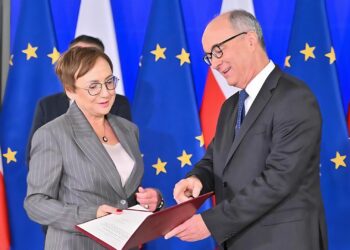
On October 13, the Senate – upper parliament chamber – introduced amendments to the legislation implementing the EU Digital Services Act (DSA) in Poland. The Sejm – lower chamber – subsequently approved most of them. One amendment was particularly troubling. It concerned content covered by Article 119(1) of the Polish Criminal Code, which deals with violence or unlawful threats motivated by factors including race, national or ethnic origin, religious beliefs, lack of religious beliefs, or… political affiliation.

Under the original version passed by the Sejm, cases involving these offenses, as well as crimes defined in Articles 256 and 257 of the Criminal Code, would have been referred to a court. Under the Senate amendment, however, the authority to order content blocked would have been given directly to government officials: the President of the Office of Electronic Communications (UKE) or the Chairman of the National Broadcasting Council (KRRiT).
That is a fundamental change. The power to determine whether certain content bears the hallmarks of a criminal offense would shift from an independent court to an administrative authority. An authority that is not a court and is subject to the influence of the government.
The amendments also expanded the list of cases in which a blocking order could become immediately enforceable at the request of a prosecutor or the police. These included Article 119(1), soliciting a murder (Article 148a(1)), inciting someone to commit suicide (Article 151), and encouraging someone to inflict serious bodily harm on themselves (Article 156a).
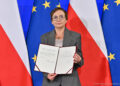
Had the changes stopped there, the bill might well have been signed. But the Senate decided that wasn’t enough. President Nawrocki vetoed the bill.
The full legislative history and amendments can be reviewed here and here.
Blocking an Entire Website Instead of a Single Post
An even greater concern was the mechanism for maintaining a register of blocked domains. The legislation retained and clarified provisions allowing entire websites to be added to the register if specific illegal content could not be removed or if the sites were repeatedly used to distribute such material. Telecommunications providers would then be required to block access to the listed domains within 48 hours.
Consider what that means. This is not about removing a single post, video, or comment. It is about cutting off access to an entire website, including content that violates no law whatsoever. In practice, perfectly legal publications could become inaccessible to users in Poland simply because government officials decided that a particular website should be blocked.
What is that, if not censorship?
These are not minor legislative adjustments. They are the construction of a system in which government officials can decide what content people can access, and even which entire websites they can visit.\
Szymon Jadczak and the Problem of Journalists Who Ask Uncomfortable Questions
In this context, the statements made by journalist Szymon Jadczak are particularly revealing. He argues that the legislation is about protecting children. At the same time, he openly acknowledges that he also has a problem with commentators whose views he dislikes and whom he considers purveyors of disinformation. When other journalists challenge him on this point, he blocks them.
So which is it? Is the legislation primarily about protecting children from abuse, or about cleaning up the information space by removing commentators whose ideas certain people find unwelcome? It would be good to make up one’s mind.
@SzJadczak ale zaraz zaraz, redaktorze – to chodzi w końcu o fejki, czy o walkę z pedofilią, z którą teraz walczyć się „nie da”?\\
— Marek Poniedziałek (@m_poniedzialek) \November 14, 2026\\
People are free to disagree with particular commentators. They can challenge their arguments, expose manipulation, and demand corrections. That’s how public debate works. But it is an entirely different matter to believe that someone should have administrative powers to cut political opponents off from their audiences. Things are starting to smell a little sulfurous, Mr. Jadczak!
That is precisely why the child-protection argument is so misleading. It cannot be used to shut down a debate about this legislation. Protecting children is not a license to impose arbitrary restrictions on free speech.
Gawkowski Talked About Shutting Down “X”
We should also remember the earlier statements by Digital Affairs Minister Krzysztof Gawkowski, who publicly discussed the possibility of shutting down the X platform and described the idea as a good one.
Given those remarks, and the proposed domain-blocking mechanism, concerns about the abuse of these new powers can hardly be dismissed as political fantasy. The bill would have created a tool capable of going far beyond removing individual pieces of illegal content. Government authorities would have gained the legal power to decide which websites people in Poland could access.
I’m not arguing that every website-blocking measure is inherently unacceptable. The state must respond to actual crimes, and children deserve special protection. But in a country governed by the rule of law, decisions about criminal liability and restrictions on civil liberties should not be left to government officials operating under a system that could be turned against politically inconvenient content.
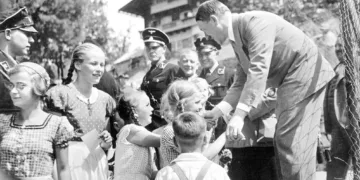
Historic Fact: Children Make “Great Photo Opportunities”…
Politicians love posing for photographs with children. Such pictures look good in campaign materials and help polish their public image. This time, however, children became a convenient argument in a dispute about something far more serious: control over information and people’s access to it.
No amount of cute kindergarten photos can make this darkness look any brighter.
We don’t want a Gulag in Poland. Neither an analog one nor a digital one.
Watch Polish President explaining his veto to censorship bill pretending to be child-protection-law.