

Despite their law degrees, MBA diplomas, and prestigious licenses, creator of Zondacrypto managed to deceive his own associates with the illusion of a dormant Bitcoin wallet? Did he mislead the authorities of several countries, leaving behind PLN 1.9 billion in losses and a staggering picture of institutional helplessness? It is hard to believe that Przemysław Kral could have really done it all by himself. All the more reason why he must be pleased to see this scandal reduced to yet another round of political brawling.
The Zondacrypto scandal is not a story about a classic bank robbery at gunpoint, nor a primitive financial scam hatched in some basement. It is a textbook example of how a handful of lawyers, compliance experts, and highly credentialed managers with degrees from prestigious European universities brazenly managed to deceive the entire state apparatus of Poland and Estonia. For years, successive state institutions failed to detect that the roughly 4,500 BTC the exchange claimed as collateral was not actually under its control.
The main engine of this illusion — as commentator Wacław Domanus aptly pointed out in a Facebook post — was one precisely staged number: 4,503.25950922 BTC. Exchange CEO Przemysław Kral waved before the eyes of officials and inspectors a public address on the Bitcoin network, 16aEn4p6hK4FMpLtJGpoQZMZ946sDg1Z6n, which held a fortune worth more than $330 million (over PLN 1.3 billion). The entire asset verification process by state authorities supposedly boiled down to a naive routine: an official entered the provided address into a publicly available blockchain explorer, saw the figures on the screen, and stamped the bureaucratic seal of approval, convinced that the exchange had full coverage for customer deposits. Whether that is actually how it happened, we do not know, but it is difficult to rule out, because Zondacrypto operated quite openly and on a massive scale in Europe for years.
Prosecutors and investigators, displaying appalling technological illiteracy, failed to understand a basic principle of how cryptocurrencies work: simply pointing to a public wallet on the internet is no proof of ownership whatsoever. Simply pointing to a public address does not prove ownership of the funds. The only proof of control over an address is the ability to cryptographically sign a message or execute a transaction using the corresponding private key. Apparently, no one demanded such proof from Kral.
Only later did it turn out that this gigantic wallet had been completely dormant since March 2016 and belonged to an inactive investor, while Zondacrypto’s management brazenly convinced the authorities that it was their own treasury, whose “key had simply been lost” after the disappearance of the company’s founder, Sylwester Suszek. This technological incompetence gave the scammers as much as four years to freely move customer funds even though the exchange did not possess the roughly 4,500 BTC it claimed as collateral.
From BitBay to Zondacrypto: The Birth of the Scam and the Escape from Oversight
To understand the scale of this operation, we need to go back to 2014, when Sylwester Suszek — dubbed the “Bitcoin king of Silesia” — founded the BitBay exchange in Katowice. The business grew at lightning speed, but its operational integrity had raised serious concerns from the very beginning. In 2018, Poland’s Financial Supervision Authority (KNF) placed BitBay on its Public Warning List for conducting activities without the required authorization and notified prosecutors.
As problems with Poland’s banking sector mounted, the exchange evacuated the country — first to Malta and then to Estonia — undergoing an evolutionary rebranding, first as Zonda and ultimately as Zondacrypto.
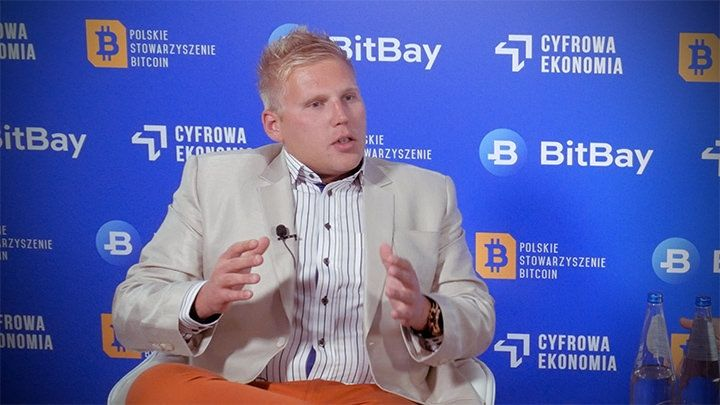
Sylwester Suszek was a classic charismatic self-made man, a master of self-promotion and a “guy next door” who knew how to win people over. However, on March 10, 2022, Suszek disappeared in mysterious circumstances in Czeladź after a meeting with Marian W. (aka “Maniek”), a Silesian businessman in the fuel industry suspected of massive VAT fraud amounting to PLN 1.5 billion. After the meeting at a gas station, all surveillance footage mysteriously disappeared, and every trace of Suszek vanished. Prime Minister Donald Tusk and the justice minister have openly suggested that he was murdered.
That was when Przemysław Kral appeared on the scene. Born in 1980 in Bytom, this lawyer gained experience, among other places, at the law firm of Czesław Tic in Tychy and while running his own legal practice. He joined BitBay in 2019 as Chief Legal Officer (CLO) and Suszek’s attorney-in-fact. Following the mysterious disappearance of BitBay’s founder, Kral took over the reins, moved the company’s core operations to Estonia, became CEO, and settled in luxury Monaco, eventually obtaining an Israeli passport and spending time in places including Dubai and Caesarea.
Education Is the Key to Conscious Investing [ARCHIVED ZONDACRYPTO SPONSORED ARTICLE]
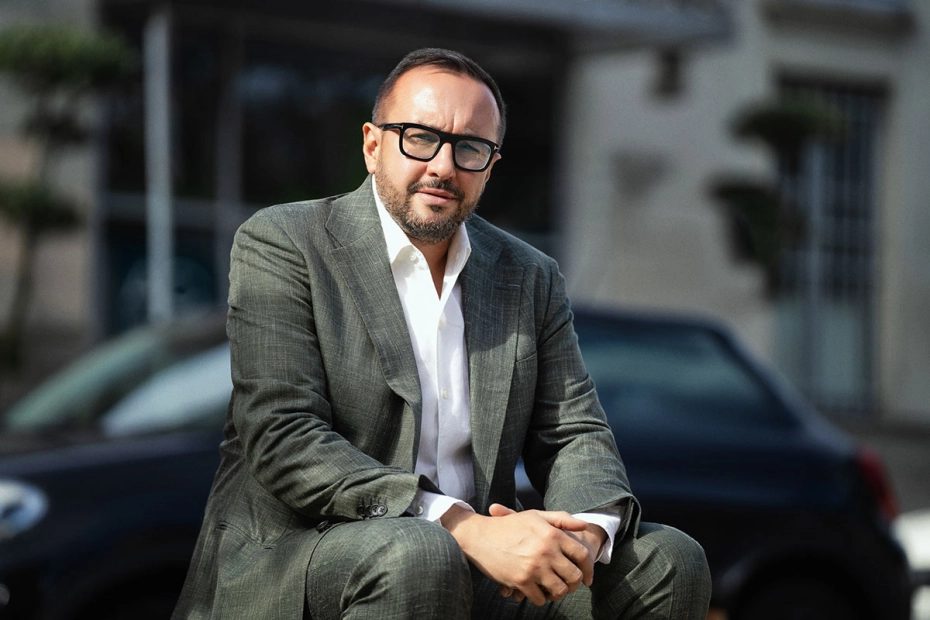
The Lawyer Duo with MBA Degrees: Kral and Gwóźdź
At the heart of Zondacrypto’s management structure was a duo — or, counting Dawid Sendecki, discussed below, even a trio — that knew perfectly well how to navigate the maze of legal regulations and business structures. Przemysław Kral and his longtime professional partner and former wife, Karolina Gwóźdź, are people with exceptionally strong formal qualifications.
Kral graduated from the Faculty of Law and Administration at the University of Silesia, while Gwóźdź is a law graduate of Jagiellonian University in Kraków. What’s more, both hold MBA degrees from the International University of Monaco (IUM).
Despite their divorce — according to CEiDG, the termination of their marital community property may have occurred around 2019/2020 — their business cooperation continued. Gwóźdź served as Zondacrypto’s Chief Legal Officer and sat on the board of the Swiss company Zonda Token AG. She was responsible for obtaining international licenses, including in Estonia, Italy, Slovakia, Lithuania, and Canada, as well as for multimillion-dollar sponsorship projects, which earned her, among other distinctions, a place in the TOP 50 Women in Sports Business ranking.
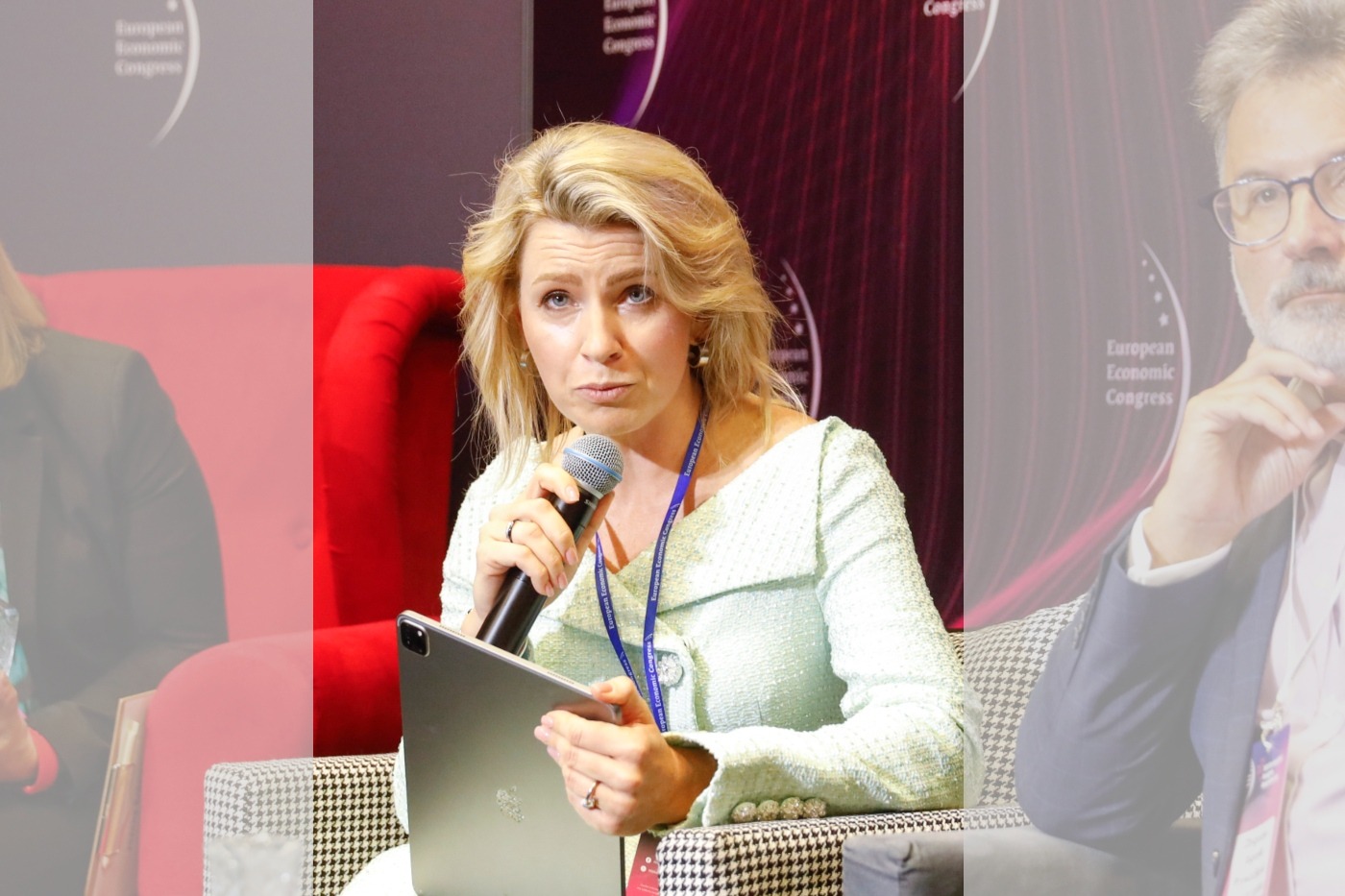
When the exchange was heading toward inevitable collapse in April 2026, Gwóźdź withdrew from her day-to-day functions, handing her responsibilities over to a younger legal counsel — demonstrating the precision with which the lawyers protected their own positions.
The Swiss Vehicle in Zug and the Mysterious Divisio Holding
The oversight apparatus in Estonia and Poland also ignored Zondacrypto’s sophisticated international ownership structure. The 100% shareholder of the Estonian exchange operator, BB Trade Estonia OÜ, was not Kral directly, but the Swiss joint-stock company Divisio Holding AG, based in Zug — at the very heart of Switzerland’s “Crypto Valley.” Kral appears in the Estonian register only as an indirect ultimate beneficial owner (UBO).
The sole formal member of the board of this Swiss holding company was Swiss lawyer Dr. André Marcel Terlinden, a partner at the Zurich law firm Neupert Vuille Partners AG. As Money.pl reported about the firm:
“Several hundred entities are registered at its headquarters, with several dozen more in the neighboring building. Among them is the Swiss-Russian Chamber of Commerce, where Dieter W. Neupert, the head of NVP AG, serves as a board member, secretary, and treasurer.”
Divisio Holding served Kral and Zondacrypto as a vehicle for holding shares and did not itself conduct operational business.
Terlinden himself also remained completely silent in the media about the matter. However, the fact that on April 27, 2026 — at the height of the liquidity crisis and following the mass resignations in Estonia — Terlinden also resigned from his position at Divisio Holding is striking. As a result, the Swiss holding company, which still formally exists, was left in the commercial register without any active board member. On May 11, 2026, Terlinden also resigned as chairman of the board of Zonda Token AG.
There is no trace of his work for companies associated with Zondacrypto on his official professional profile or on LinkedIn. Jakub Perkowski, who published an interesting analysis of these connections on Facebook many months ago, may shed some interesting light on his business and legal ties.
Supervisory Board in Estonia: An Expert Shield and an Italian Soccer Player “on the Side”
To obtain a European license and build unquestionable credibility ahead of the implementation of the EU’s MiCA regulation, people with powerful names and undeniable economic and technological credentials were appointed to the Supervisory Board of BB Trade Estonia OÜ.
Among them was Guido Bühler, a Swiss banking and blockchain expert, former Managing Director at UBS Investment Bank and co-founder and former CEO of SEBA Bank AG, one of Switzerland’s first licensed crypto banks. There was also Veronika Tugo, an experienced Estonian entrepreneur and finance and accounting specialist!
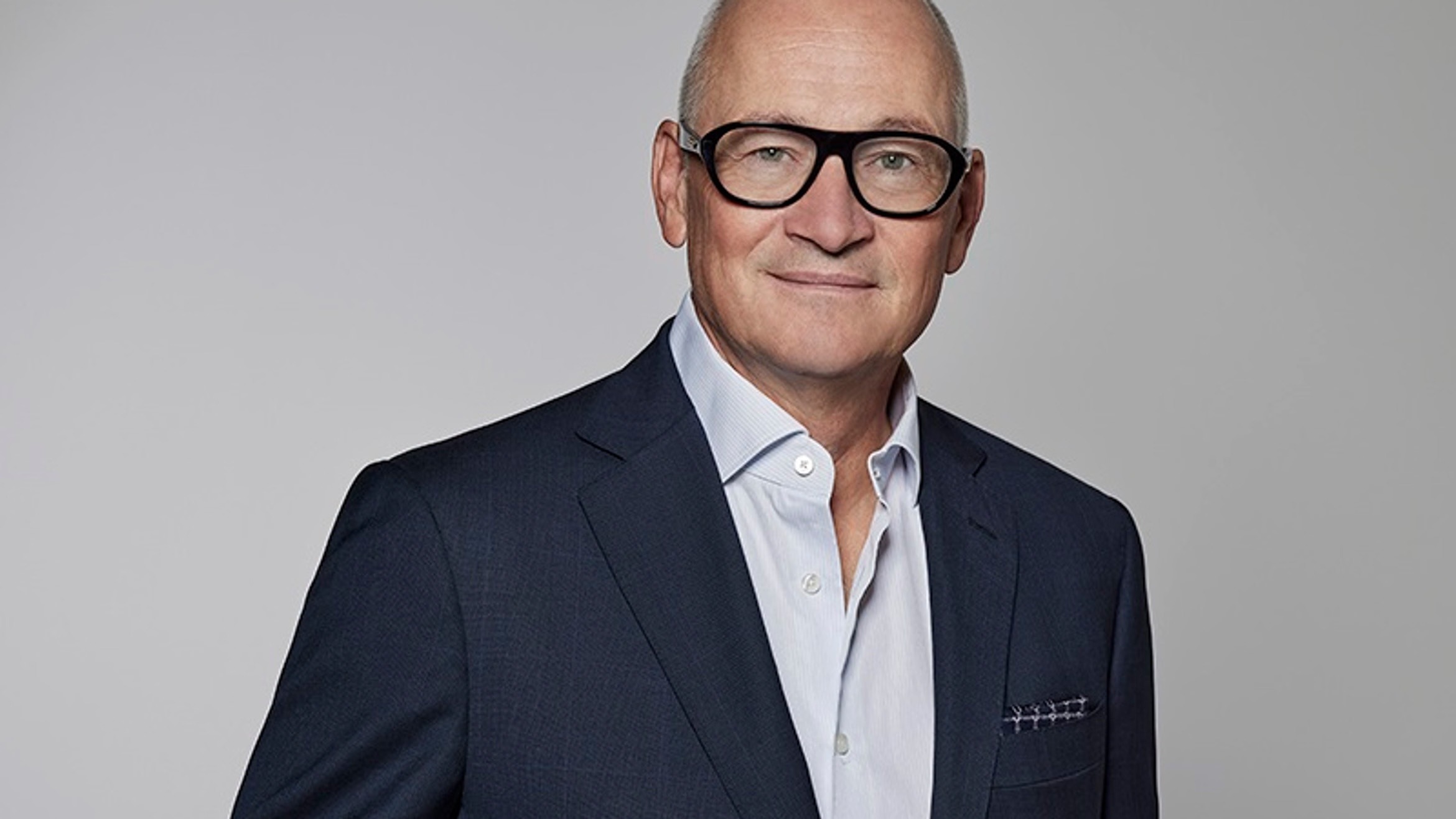
Another certainly interesting figure was Georgi Džaniašvili, an Estonian lawyer of Georgian origin with more than 13 years of experience in corporate law and IT/blockchain. The media, however, pointed to troubling episodes from his past. In 2015, he was linked to Verdis Hall LLC, which owned a 10% stake in Russia’s Rosenergobank, which lost its license in 2017 after billions of rubles were siphoned out.

The supervisory board of the Estonian entity also included Giorgio Chiellini, the legendary Italian soccer player, European champion and longtime Juventus captain, who also holds a degree with honors in economics from the University of Turin. He was brought in as a brand ambassador and briefly joined the board, serving as a public-relations “side dish” to legitimize the exchange in Western markets.
Taken together, these names — people with substantial economic expertise and standing — created an armored protective façade. With former UBS bank executives, FINMA experts, lawyers, and highly credentialed economists sitting on the company’s oversight bodies, regulators in Tallinn and Warsaw could all the more readily assume that the exchange was being operated according to the highest financial standards. They could accept this uncritically because the foundations of the legal framework governing cryptocurrencies and blockchain technology were only beginning to take shape.
Mass Escape from the Sinking Ship: Statements and a Common Line of Defense
The idyll shattered in April 2026, when a payment bottleneck and massive outflows of funds brought Zondacrypto to a standstill. What followed was an immediate, coordinated retreat by management and supervisory personnel.
The entire Supervisory Board (Tugo, Bühler, Džaniašvili) resigned, issuing a statement and notifying the Estonian prosecutor’s office and the Financial Intelligence Unit (FIU).
Despite their training and experience, all board members employed an almost identical defensive maneuver. They accused the management (primarily Kral) of “systematically misleading [them], concealing information, and a lack of transparency.” They stated with disarming candor that they had “learned from media reports,” rather than internal reports, about the exchange’s disastrous financial condition and lack of cryptocurrency reserves.
This line of defense consisted of placing all the blame on Kral’s individual actions while simultaneously portraying highly paid experts as innocent victims who knew nothing.
Dawid Sendecki, Kral’s Right-Hand Man. He Didn’t Know Anything Either!
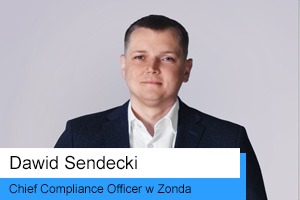
Even more striking is the case of Dawid Grzegorz Sendecki, formally positioned as Kral’s right-hand man. He has an outstanding background in security and oversight: a graduate of the Police Academy in Szczytno and holder of elite international AML and risk-management certifications: CAMS (Certified Anti-Money Laundering Specialist), CAMS-RM, and ICA GRC. Sendecki served as a member of the board of BB Trade Estonia OÜ (alongside Kral), Chief Risk & Compliance Officer, and Money Laundering Reporting Officer (MLRO). He represented the company before politicians and regulators.
According to Zondacrypto’s statements and media reports from the period when the exchange was operating, Sendecki was a key figure in its operations.
“He closely coordinates work related to Zonda’s compliance with regulations and legal requirements. He contributed significantly to the positively assessed audit by the Estonian Financial Intelligence Unit.”
— we read in a 2021 article (probably a company press release).
When the scandal erupted, this highly qualified risk specialist published a statement on LinkedIn on April 18, 2026. He stated that during six years of working for the company, he had not noticed any irregularities within his area of responsibility (AML) and that he learned about the lack of private keys to the 4,500-BTC wallet… from Kral’s public statement.
The contrast is staggering: a man armed with EU financial-security certifications, responsible for operational oversight and sitting on a two-member management board, narrowed his responsibility at the moment of catastrophe exclusively to a narrow segment of KYC procedures, distancing himself from any knowledge of his own company’s financial flows.
Buying Immunity: Millions Spent on Advertising, Sponsorships, and Full Political Backing
Why did the Polish state fail to become suspicious for four years (2022–2026)? The answer lies in a massive, carefully planned effort to drown out any questions with millions of złoty poured into image-building. As Wacław Domanus put it, the perpetrators used customers’ funds to create the façade of an “untouchable giant.”
Zondacrypto bought itself protection on every possible front. There was top-tier sports sponsorship: it became the general sponsor of the Polish Olympic Committee (PKOl) under an agreement worth more than PLN 18.5 million, signed in Bergamo by Radosław Piesiewicz. It sponsored, among others, Juventus Turin, Atalanta Bergamo, AS Monaco, the Giro d’Italia, the Tour de Pologne, and soccer clubs Raków Częstochowa, Pogoń Szczecin, and Lechia Gdańsk.
Between 2024 and 2026, Zondacrypto spent as much as PLN 53.4 million on traditional-media advertising at list prices. According to a report by the Institute of Media Monitoring, the main beneficiary was reportedly TV Republika, which received PLN 37.3 million (approximately 70% of the entire advertising budget). In 2025, the exchange was the station’s largest advertiser, airing an average of 18 spots per day.
Zondacrypto also bought political goodwill across different sides of the political spectrum. Zondacrypto and its subsidiaries (such as Czech company Expofer Servis House) transferred, among other amounts, PLN 450,000 to the Instytut Polski Suwerennej foundation associated with Zbigniew Ziobro, €70,000 to the Dobry Rząd foundation associated with Przemysław Wipler, and sponsored the CPAC Poland event attended by leading right-wing politicians.
In May 2024, the Zondacrypto cryptocurrency exchange was an official partner and sponsor of the 16th European Economic Congress in Katowice. Prime Minister Donald Tusk and European Commission President Ursula von der Leyen were among those attending the opening. Karolina Gwóźdź, then Zondacrypto’s Chief Legal Officer, also spoke on a panel about the future of finance.
Former CBA agent Artur Chodziński also appeared in Kral’s circle. Through a Czech company, he issued invoices totaling more than PLN 500,000. In return, he allegedly passed sensitive information about journalists under investigation — including Michał F. of TVN24 — to Kral and facilitated contacts with politicians and state institutions.
But Zondacrypto’s creation of appearances did not end there! The audacity of the operation reached its peak when Zondacrypto began conducting official cryptocurrency and AML training for… the Polish Police and the National Revenue Administration. Officials and investigators could have assumed that if the company trained customs officers and appeared on Olympic posters, it must have been thoroughly vetted by the state’s security agencies.
State Incompetence or a Special-Services Umbrella?
This raises a fundamental question: How is it possible that, despite years of interest from the KNF and prosecutors, authorities failed to establish earlier that the exchange did not control the roughly 4,500 BTC it claimed as collateral?
On the one hand, the authorities’ impotence had a formal basis: the KNF did not have direct supervisory powers over a company registered in Estonia. Meanwhile, Estonia’s FIU acted sluggishly and did not finally revoke the license until June 2026.
On the other hand, the sheer number of clues pointing to deeper involvement by the special services is staggering. Money from the cryptocurrency market has long been used to finance informal intelligence operations or transfers outside the banking system. BitBay founder Sylwester Suszek began his business with the support of “Maniek’s” fuel mafia (Marian W.), who, despite allegedly defrauding the state of PLN 1.5 billion in VAT, received a letter of safe conduct from the Polish prosecution service and a guarantee of immunity.
A former CBA agent on the exchange’s payroll and recordings of conversations between ABW officers and Zondacrypto representatives raise justified suspicions that the state lost control over how former agents monetize their operational knowledge for the benefit of this digital network. As former ABW officer Lt. Col. Marek Świerczek bitterly observed:
“Poland is dangerously approaching the model of a post-colonial state in which corrupting power naturally comes into contact with organized crime.”
What Happens Next? Kral’s Status and the Silence Surrounding Those Behind Him
At the beginning of September 2026, Zondacrypto’s gigantic financial hole had reached an unimaginable PLN 1.9 billion (€431 million), while the administrator in Estonia found the company’s accounts in ruins, with a pathetic €167,000 remaining.
So what is the current status of the main actors in this drama? Przemysław Kral is somewhere abroad. As Prosecutor General Waldemar Żurek officially stated, Kral is neither a crown witness nor a witness — formally, he has suspect status and faces fraud charges, while providing explanations and cooperating with investigators.
Charges and arrests in the connected Katowice investigation have so far affected several people from the network’s circle: Polish Olympic Committee president Radosław Piesiewicz, Anna P., Jaromira W. (the former wife of “Maniek”), investor Rafał Zaorski, and Roman Ż. (Suszek’s business partner).
Yet one big question mark remains:
Why are law-enforcement authorities not interested in many key figures on the boards of Zondacrypto’s parent companies?
Przemysław Kral could not possibly have acted entirely alone, and the assumption that he managed to deceive tens of thousands of people, including his closest associates, is simply absurd. There was a complicated network of companies in Poland, Estonia, and Switzerland, and their governing bodies included people with enormous legal, financial, and compliance expertise.
Karolina Gwóźdź, as CLO and a member of the board of Zonda Token AG; Dawid Sendecki, as risk director and a member of the Estonian operator’s board; and the Swiss managers of Divisio Holding. These individuals held positions that gave them significant responsibility for legal oversight, risk, compliance, or the operation of the companies. This raises the question of how they could have failed to know about the problem with access to a key component of the declared reserves.
The fact that such highly qualified experts with MBA degrees and various certifications spent years participating in the group’s management, legal oversight, and compliance, while some of them now claim they did not know about the lack of access to the key wallet, raises the question of how effective the entire control system actually was.
The state woke from its slumber only when the treasury — or rather, its façade — was already empty, while the main directors of the spectacle safely watch everything unfold from their foreign havens, pleased that the case is turning into yet another round of political brawling.
As always.