
Blocking Polish researcher Dr. Michał Siekierka, the grandson of a Home Army soldier who survived the Volhynia Massacre, at the border while he was travelling to the funeral of 55 victims of the Volhynia Massacre is a blatant Ukrainian affront to Polish national memory, to which the Ministry of Foreign Affairs and the ruling coalition are responding today with deafening silence
The Road Blocked at the Border
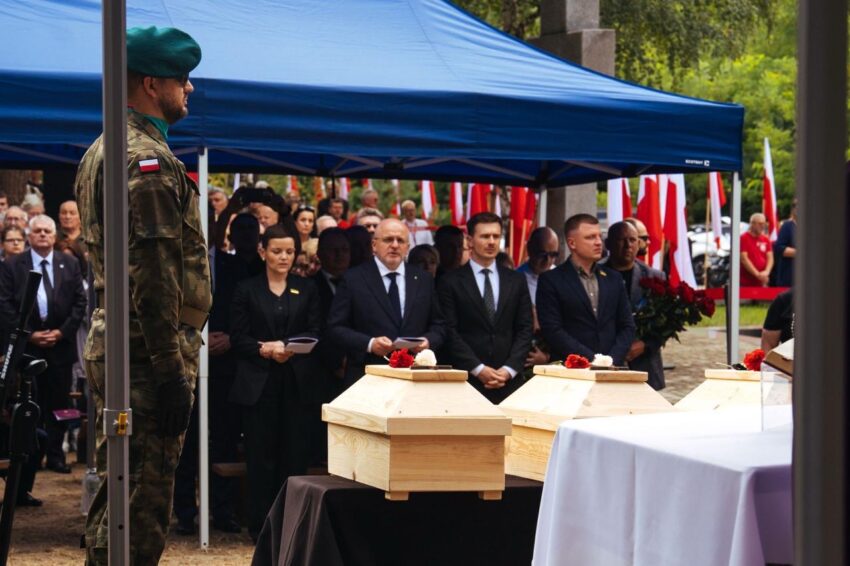
On Sunday, August 30, 2026, three specially organised coaches filled with families of victims of the genocide in Poland’s eastern borderlands and participants in the memorial ceremonies departed from Lublin. Their destination was a state funeral for 55 victims of the Volhynia Massacre, including 26 defenceless children, whose remains were finally found and exhumed after years of efforts during this summer’s work in Ostrówki and Wola Ostrowiecka.
For Poles who have tirelessly fought for decades for the elementary right to a dignified and Christian burial for their ancestors murdered by Ukrainian nationalists, this was supposed to be a day of deep reflection and historical justice. But it turned out differently.
At the Dorohusk–Yahodyn border crossing, Ukrainian officials ordered one person to leave the coach – Dr. Michał Siekierka. He was shown a passport containing a three-year entry ban, secretly issued by the Security Service of Ukraine (SBU) as early as November 2023. The researcher and social activist learned of the decision only at the border, and the immediate intervention of the Polish consul proved of little avail.
A Mission Written into His Genes and Scientific Truth
Who is the man whom the Ukrainian state has treated as a threat to national security?
Dr Michał Siekierka (born 1984) is a respected historian, a researcher at the Wrocław Branch of the Institute of National Remembrance and vice-president of the Association for Commemorating the Victims of Ukrainian Nationalist Crimes (SUOZUN). His daily work consists of painstakingly documenting crimes, collecting testimonies from the few remaining surviving witnesses, and fighting to ensure that the truth about the tragedy of Poland’s eastern borderlands is not forgotten.
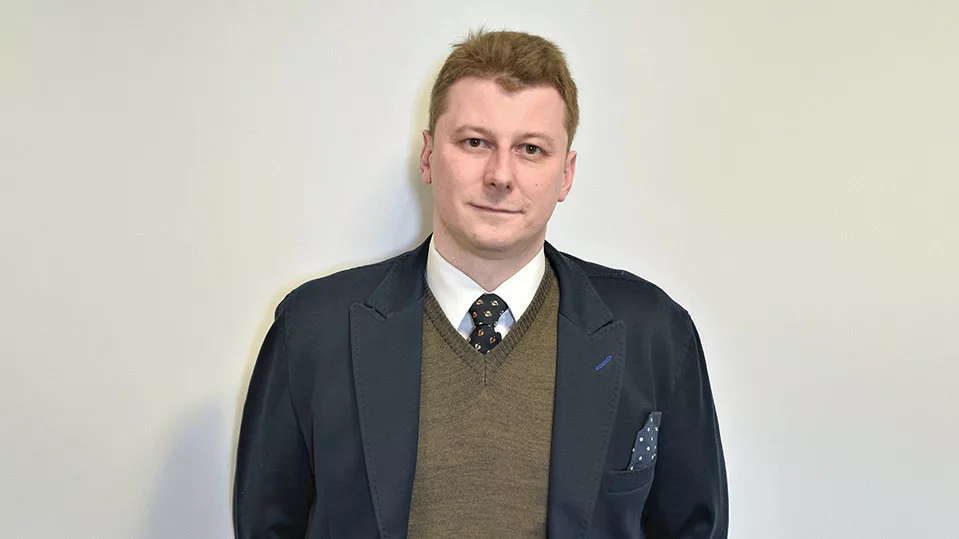
This mission has a profound personal and family dimension for him. The association in which he is active was founded by his grandfather, Szczepan Siekierka (who died in 2021) – a Home Army soldier who survived the massacre and spent decades documenting the crimes of the OUN-UPA.
Dr Siekierka continues this work through academic research, educational lectures and book publications, including monographs on the 14th Waffen Grenadier Division of the SS “Galizien” and the Ukrainian question in German policy. The fact that a man with such a record, travelling privately as a representative of the victims’ families, was prevented from paying his final respects to his murdered compatriots demonstrates the extent of the ill will of decision-makers in Kyiv.
The Bill for Boundless Assistance
It is difficult not to view this incident through the prism of the events of recent years. When Russia launched its direct invasion of Ukraine in 2022, Poland opened its borders, homes and hearts to millions of refugees without hesitation, while simultaneously becoming a key military, political and humanitarian base for its fighting neighbour. Poles gave Ukraine enormous resources, often at the expense of their own security and personal everyday comfort.
The response to this unprecedented solidarity is now a cynical, bureaucratic blow delivered by the Ukrainian services. Blocking a Polish historian travelling to the funeral of victims of genocide is not an ordinary procedural misunderstanding. It is an elementary lack of respect for Poland and an outrageous trampling of our national historical sensitivities. Yet another Ukrainian affront to Poland. How much more are we expected to endure?
Kyiv is once again proving that it takes Polish assistance for granted – something to which it apparently does not have to respond with even a minimum degree of partnership or empathy.
Deafening Silence in Warsaw
Just as painful as the Ukrainian stance is the paralysis that has engulfed Poland’s centres of power. Many days have already passed since the scandalous detention of Dr. Siekierka at the border, and the Polish Ministry of Foreign Affairs and politicians from the ruling coalition have fallen into deafening, scandalous silence.
As of the beginning of September 2026, Donald Tusk’s government has issued no official public statement in defence of a Polish citizen and an official of a state institution. Although the Deputy President of the Institute of National Remembrance sent an official letter to Ukraine’s ambassador Vasyl Bodnar, simultaneously forwarding it to Foreign Minister Radosław Sikorski for information, the head of Polish diplomacy prefers to remain silent.
Instytut Pamięci Narodowej zwrócił się do Ambasady Ukrainy w Polsce z prośbą o wyjaśnienie powodu niewpuszczenia pracownika IPN na uroczystości pogrzebowe ofiar Zbrodni Wołyńskiej w Ostrówkach.@UKRinPL @MSZ_RP pic.twitter.com/8foM3VOhnE
— Instytut Pamięci Narodowej (@ipngovpl) September 4, 2026
The government’s failure to respond firmly, and the silence of the prime minister and foreign minister, are perceived by the public and by communities representing Poland’s eastern borderlands as capitulation and as giving consent for a foreign country to humiliate Poles who seek to preserve historical truth with impunity.
Time for a Symmetrical Response
If requests, gestures of solidarity and Warsaw’s conciliatory policy bring nothing but further humiliations, the time has come for Poland to start acting according to the methods of hard realism. Our diplomacy must take decisive, symmetrical action.
Introducing analogous entry bans into Poland for those Ukrainian officials, historians and social activists who actively relativise the crimes of the OUN-UPA, promote the cult of criminals responsible for the genocide of Poles, or actively block and obstruct the process of Polish exhumations in Volhynia.Making Polish international support – political, diplomatic and military alike – conditional upon the immediate and unconditional unblocking of exhumation work and Kyiv’s full respect for Polish national memory.
Finally, establishing a special interministerial task force which, in cooperation with the Institute of National Remembrance, would create a clear system for protecting and monitoring the security of Polish researchers and members of organizations representing Poland’s eastern borderlands, guaranteeing that no citizen of the Republic of Poland is left defenseless in the face of covert and unlawful actions by Ukrainian services.
Only a firm, partnership-based stance and respect for ourselves can force the Ukrainian side to abandon its arrogance and treat Poland with the seriousness it deserves.
Leading photo: The Ministry of Culture and National Heritage of the Republic of Poland / “X”
Read in Polish language:
![Ukraine Now Officially Holds Poland and Polish Historical Sensitivities in Contempt [COMMENTARY]](https://lubuski.sdp.pl/wp-content/uploads/2026/06/PL-flag.png) |