



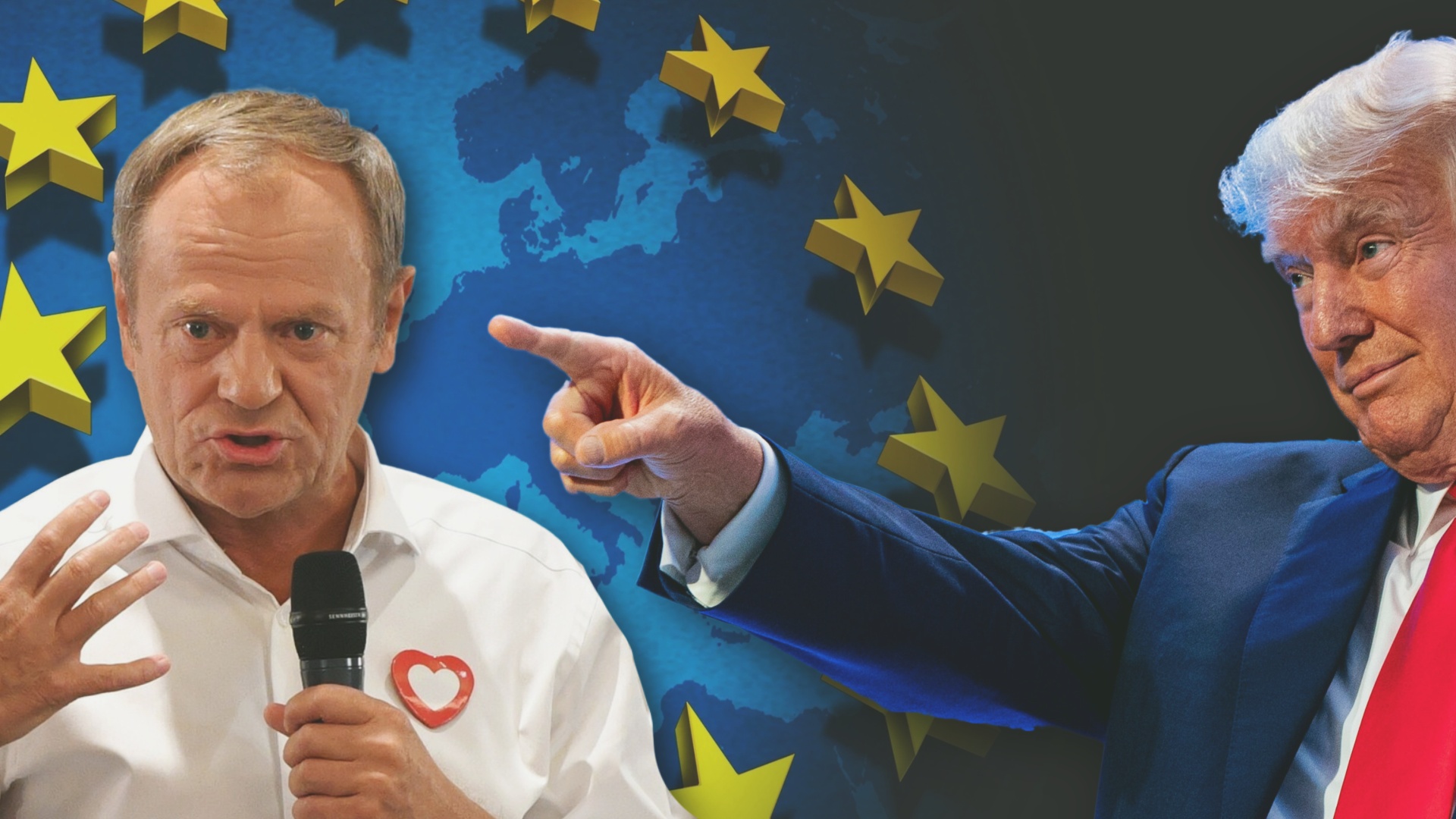
The geopolitical landscape is shifting rapidly, with Poland, the European Union, and the United States at the center of an increasingly complex relationship. As Donald Trump returns to the White House, Polish Prime Minister Donald Tusk faces a challenging diplomatic balancing act. Tusk’s past accusations against Trump, particularly claims of Russian influence, have resurfaced, threatening to impact Poland’s traditionally strong ties with Washington. Meanwhile, the European Union seeks to redefine its security posture amid concerns over U.S. engagement in Europe and growing threats from Russia and China.
At stake is not only Poland’s role within the EU but also its strategic alliance with the United States. With trade tensions, defense cooperation, and Ukraine’s future all hanging in the balance, the choices made by European and Polish leadership in the coming months will have far-reaching consequences.
Will Poland strengthen its transatlantic partnership, or will tensions with Washington push it toward greater European autonomy? This analysis explores the critical issues shaping Poland’s position within the broader framework of EU-U.S. relations.
Poland, the EU, and the U.S.: A New Geopolitical Reality
Trade Wars and Strategic Alliances
Polish Prime Minister Donald Tusk has expressed deep concerns about the potential for economic conflicts between the U.S. and its allies in the European Union. Addressing the need for unity in the face of Russian aggression and Chinese expansion, Tusk warned that internal disputes, especially trade wars, could be counterproductive.
“Poland will advocate for reason and caution, making it clear that imposing tariffs and trade conflicts is a complete misunderstanding. It would be one of the most brutal paradoxes if we, as allies, were to stumble into a completely senseless conflict,” Tusk stated.
Furthermore, Tusk emphasized the necessity for Europe to fund its own security measures, particularly the Eastern Shield initiative. The EU has already allocated €100 million for this purpose, with further discussions involving Scandinavian and Baltic countries regarding air defense and Baltic security. The issue of continued support for Ukraine in its war against Russia also remains a priority.
The UK and the EU: A Security Partnership Despite Brexit
Tusk also underlined the importance of maintaining strong ties with the UK, despite Brexit. He initiated discussions in Brussels on ensuring Britain remains a close partner in security, defense, and trade.
“We must find a way to eliminate trade barriers between the UK and Europe. Now is the moment to get as close as possible,” Tusk urged.
U.S. Arms Deals and Poland’s Defense Strategy
The Polish Prime Minister addressed concerns about potential EU restrictions on purchasing American military equipment. He emphasized that Poland would strongly oppose any regulations that would limit European funding for U.S. weapons, highlighting the importance of defense cooperation with Washington, London, and Ottawa.
“This is not about appeasing Washington. It is about taking security seriously as our highest priority. American weapons and strong relations with the U.S., Canada, the UK, and Norway must remain at the center of our defense strategy,” he asserted.
Tusk’s Trump Controversy: A Political Time Bomb
A major point of contention in U.S.-Poland relations stems from Donald Tusk’s previous accusations against Donald Trump. During his 2023 campaign, Tusk alleged that Trump had ties to Russian intelligence dating back 30 years. These remarks, initially dismissed, resurfaced after Trump’s re-election victory, causing concern about the future of U.S.-Poland relations.
Washington Reporter recently released a translated video of Tusk’s comments, drawing significant attention in the U.S. The report also highlighted Tusk’s past consultations with Vladimir Putin regarding the American missile defense shield in Poland—a move that many viewed as controversial.
During a 2023 rally in Bytom, Tusk doubled down on his accusations, stating,
“Trump’s dependency on Russian intelligence is no longer up for debate.”
Tusk: „Zależność Trumpa od rosyjskich służb nie podlega dyskusji”. „Został zwerbowany 30 lat temu”.
To o człowieku który latami blokował NS2, odblokowany następnie przez Bidena.
Tusk do dymisji. Już.
pic.twitter.com/I2d3fJLguR— Zygfryd Czaban (@CDzwoni) November 6, 2024
He cited unnamed American intelligence sources, claiming that the former president had been recruited by Moscow decades earlier. However, after Trump’s victory in 2024, Tusk distanced himself from these claims.
Polish prime minister Donald Tusk about US president @realDonaldTrump: He lies thousend times, he is russian agent. English subtitles: pic.twitter.com/nDKkMxShxV
— Paweł Rybicki (@Rybitzky) December 17, 2024
The Diplomatic Fallout: What’s Next for Poland-U.S. Relations?
Following Trump’s re-election, Polish opposition figures have criticized Tusk’s past rhetoric, arguing that it damages Poland’s strategic position with the U.S. PiS MEP Dominik Tarczyński, who was present at Trump’s election night event, confirmed that the president-elect was aware of Tusk’s statements. Additionally, Vice President J.D. Vance has publicly criticized the Polish Prime Minister over these remarks.
PiS leader Jarosław Kaczyński accused Tusk of prioritizing an anti-American agenda over strengthening Polish-American relations.
“Poland, holding the EU presidency, faces a choice: to be a leader in European cooperation with the Trump administration or to inspire an anti-American rebellion in Europe. Tusk seems to favor the latter,” Kaczyński wrote on social media.
Polska, pełniąc prezydencję w UE, stoi przed wyborem: albo będzie liderem budowy europejskiego porozumienia z administracją Donalda Trumpa, albo będzie inspirować siły antyamerykańskie w Europie. Tusk sygnalizuje, że woli być liderem antyamerykańskiej europejskiej rebelii. Tworzy…
— Jarosław Kaczyński (@OficjalnyJK) February 15, 2025
Presidential advisor Stanisław Żaryn echoed these concerns, urging the Polish government to focus on national interests rather than ideological battles.
“Poland must maintain real relations with the U.S. and negotiate for increased American military presence. Instead, we risk engaging in symbolic attacks on Trump’s administration, which contradicts Poland’s strategic interests,” Żaryn warned.
Europe’s Security in the Trump Era
Tusk has called for urgent European action on Ukraine, emphasizing that the EU cannot rely solely on American support. “If America turns its back on us, who will stop Russia?” he asked, advocating for greater European self-sufficiency in defense.
The return of Trump has triggered debates on Europe’s strategic autonomy, with leaders like Ukrainian President Volodymyr Zelensky calling for a unified European military force.
“The time has come for Europe to take control of its own defense,” Zelensky declared.
Meanwhile, Trump’s direct engagement with Vladimir Putin and Ukrainian President Volodymyr Zelensky has fueled speculation about potential peace negotiations led by the U.S., raising concerns in Brussels about the EU’s role in shaping the conflict’s outcome.
Conclusion: Poland at a Crossroads
As Poland navigates its role between Brussels and Washington, Tusk’s previous statements on Trump and his current policy decisions will be under intense scrutiny. The coming months will determine whether Poland can balance its European commitments with its historical ties to the U.S., or if ideological divides will further strain transatlantic relations.



