


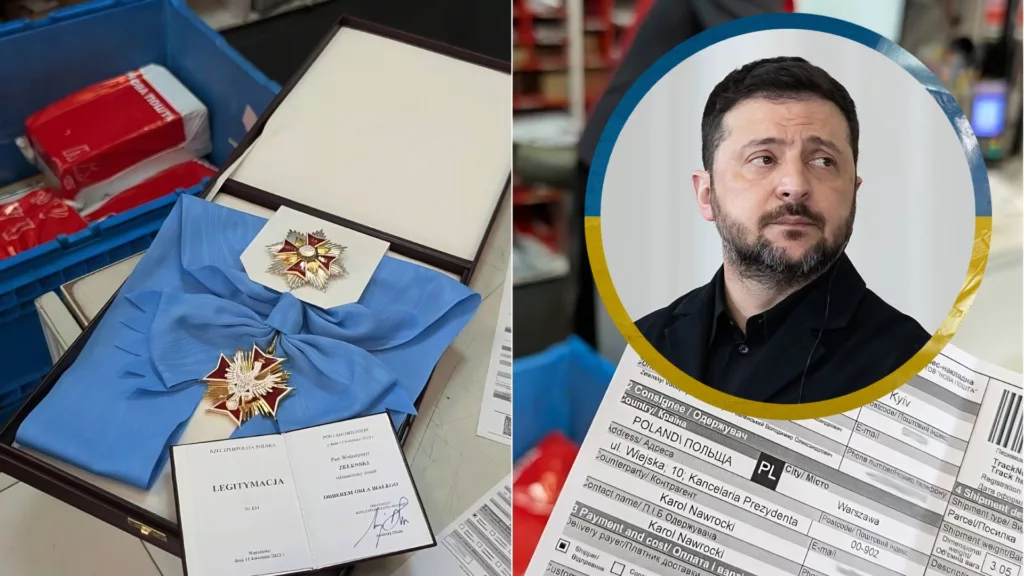
Poles feel no gratitude toward, nor do they intend to honor, those who glorify the murderers of their ancestors – innocent women, including pregnant women, and children murdered in cold blood in the name of hatred and a form of Ukrainian nationalism that collaborated with Nazi Germany. Entire Polish villages were wiped from the map solely because their inhabitants were Polish. More than one hundred thousand civilians became victims.
The Volhynia Massacre (1943-1944) was one of the most brutal episodes of ethnic cleansing during World War II. Ukrainian nationalist forces, primarily the Ukrainian Insurgent Army (UPA), systematically murdered tens of thousands of Polish civilians. Estimates range from 50,000 to more than 100,000 victims in Volhynia and neighboring regions.
What makes this tragedy even more painful is the fact that, to this day, the bodies of the overwhelming majority of those murdered have never been found or given a dignified burial. This remains the case despite more than thirty years of Ukraine’s sovereignty – a sovereignty that brave Ukrainian citizens are now fiercely defending against the imperial ambitions of Vladimir Putin.
Ukraine continues to restrict access to potential mass graves and hinders proper exhumations, preventing families from honoring their loved ones and bringing closure to this dark chapter of history.
We, the Polish people, must remember the victims and demand truth and basic dignity for the dead, just as any civilized nation would do.
Without this, there will never be genuine Polish-Ukrainian reconciliation. Without an act of remorse, Ukraine will never become part of the European Union, regardless of whether it defeats Putin’s army or not. Ukraine will remain a state of the East, with all the civilizational consequences associated with it – corruption, poverty, and oligarchs deciding everything.
Polish historians have already done enormous work documenting the Volhynia Massacre. There is nothing to “return” to them and nothing from which to “wash one’s hands.” Historians carry out this work of uncovering the truth for all of us – both Poles and Ukrainians – not merely for academic purposes. Recent research, for example in Huta Pieniacka, will, I believe, allow us to discover even more of this truth. Other sites are still waiting.
If, as many Ukrainian citizens claim, crimes analogous to those committed by Ukrainian nationalists against Poles were also committed by the Polish underground forces, I see no obstacle and indeed demand equally thorough and honest research from the Ukrainian side. If “we share mutual guilt,” as so many assert, then Ukrainian researchers should demonstrate it. Let them explain the causes and scale of Polish wrongdoing honestly and professionally, not through propaganda.
If the President of Ukraine, Volodymyr Zelenskyy, does not understand why the cult of the perpetrators of the Volhynia crimes is unacceptable to Poles, then he is harming relations between our nations. He is also harming Ukraine itself.
Catherine II and Benito Mussolini have long been dead, although the Order of the White Eagle that had been awarded to them was never formally revoked. History judged them. One thousand years of Polish history also contain mistakes and failures. Today’s leaders, however, have the opportunity to learn from history and build good relations with their neighbors.
By showing a lack of respect for Poland’s highest state decoration and returning it by ordinary mail, President Zelenskyy demonstrates disrespect toward Poland and toward all Poles.
Yesterday, the President of Poland noted that the Order of the White Eagle is not an ordinary award. It is a symbol of the highest trust of the Republic of Poland. It signifies a special bond with the Polish state and the special gratitude of the Polish People. Such a symbol… pic.twitter.com/FXNVFUW6Sh
— Volodymyr Zelenskyy / Володимир Зеленський (@ZelenskyyUa) June 20, 2026
About the Author

Read in other languages:
 |
 |
